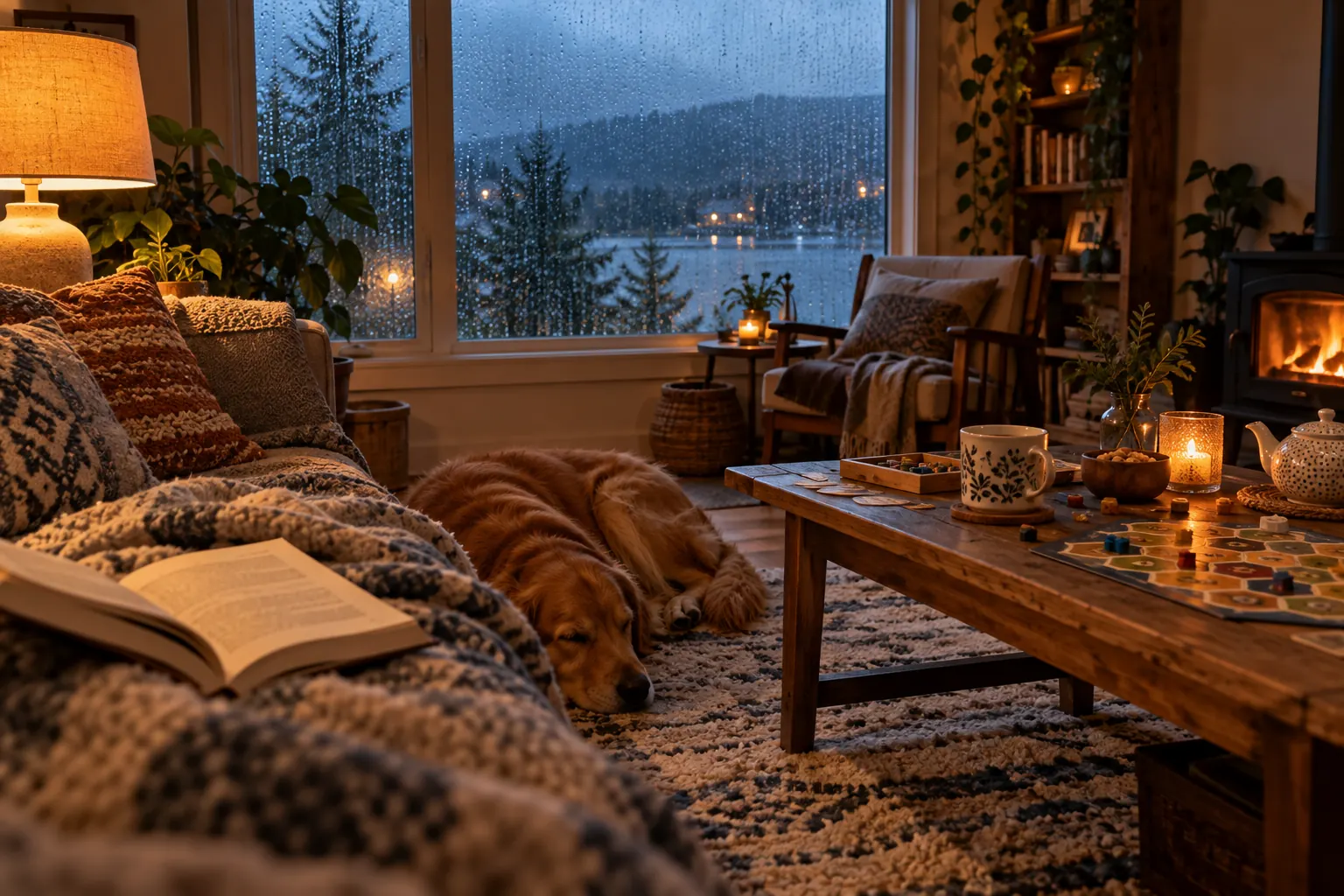
Rain interrupts some plans kindly. The trail is muddy, the outdoor market closes early, and the long drive suddenly feels less appealing. Staying home can be a choice rather than the disappointing remainder of the day.
A good indoor day needs less programming than a good outing. It helps, though, to give it a beginning, a middle and a small ending. That shape keeps the hours from dissolving into an aimless scroll.
Make the room ready for the weather
Open the curtains and let the gray light in. Put wet shoes by the door. Make one comfortable place to sit with a blanket, a drink and a lamp you can switch on when the afternoon darkens. You do not have to tidy the whole house. Clear only the surface you will use.
If a dog is staying in with you, plan shorter outdoor breaks when the weather allows, then dry paws and provide a quiet place to rest. Some dogs will happily sleep through the rain; others need indoor games or a familiar training exercise. Match the activity to your dog rather than assuming every rainy day demands a long substitute walk.
Choose one active pleasure
Bake something simple, repair a torn shirt, rearrange a small shelf, assemble a puzzle or make a pot of soup. The activity should fit the time and energy you have. It is a poor rainy-day project if it requires buying six ingredients or cleaning three rooms first.
A shared task can work well: someone cooks while someone selects music, or two people play a board game that can finish in an hour. For a solo day, try reading a short story aloud to yourself or making a playlist for the next trip. The point is to give your attention one place to rest.
Make space for actual rest
After the activity, allow a stretch without a task. Sit by the window, read a chapter, take a nap or listen to the rain. If you spent the previous weekend moving constantly, this can feel unfamiliar. Resist turning the pause into a list of self-improvements.
People sometimes notice vivid dreams after a crowded or irregular weekend. Our reflection on weekend dreams offers a light way to write down an image without treating it as a diagnosis. A quiet evening can also help you notice which parts of the last outing you want to repeat.
Keep dinner easy
Use what is already in the kitchen when possible. Toast and soup, a tray of roasted vegetables or leftovers arranged well can feel more generous than an ambitious recipe started too late. Set the table, even for one person. A small change of setting helps mark the evening.
If the rain lifts, take a short walk outside before dark. There is no need to recover the canceled itinerary. An ordinary circuit of the block can make the homecoming pleasant twice.
Leave a note for the next clear day
Write one idea for an outing you still want to do, including the first practical step: check park hours, book a timed ticket or find a suitable route. Then put it away. The slow city-day plan is a good starting point for a future afternoon, and the dog day-out guide helps if your companion has four legs.
A rainy day at home need not imitate a holiday brochure. It can be ordinary, warm and unfinished. Often that is precisely what the week was missing.
A low-energy version
If you are tired, skip the project entirely. Change into dry clothes, eat something uncomplicated and choose a film or a familiar book. An indoor day does not have to be productive to be worthwhile. Rest is a complete activity when the week has already demanded a great deal.
If several people share the home, tell them what sort of afternoon you want. Someone may be hoping for a lively game while someone else needs quiet. A simple agreement about one shared hour and one separate hour can make the space more comfortable for all.
A playful version
For children or playful adults, build a small tasting tray from whatever is in the pantry, hold a drawing session using the view from the window, or make a paper map for a future neighborhood walk. Keep it small enough to clean up in ten minutes. The best indoor ritual is one you would willingly repeat.
With a dog, hide a few treats in safe, familiar spots for a short search game, if that suits the dog's health and training. Supervise the activity and avoid any materials the dog could swallow. Follow it with downtime; even a game at home can be exciting.
When the weather clears
Open a window if conditions allow. Put away the blanket, wash the cups and leave one item ready for tomorrow. The ending matters because it lets the rainy day feel like an intentional pause rather than a lost afternoon.
A quiet afternoon with other people
Shared time works better when everyone can opt into it. Invite a housemate to help make lunch or choose a short game; do not assume they want a full schedule. If someone needs to work or rest, protect that space. The sound of rain can be soothing to one person and distracting to another.
An indoor ritual can be as simple as setting out the good mugs, lighting a lamp early and playing an album from beginning to end. The room already exists. You are only changing your attention to it.
Reset without making a project
Before evening, put a few things back where they belong. Take the wet coats off the chairs, empty the cups and check tomorrow's weather. This is a small transition, not a cleaning campaign. It closes the day gently and leaves the house ready for the next plan. If the sun appears unexpectedly, you can go outside with no sense that the indoor day was wasted.
When staying in was not your choice
A canceled event can leave a genuine disappointment. Name that before trying to replace it with a cheerful activity. Put the ticket or reservation details somewhere safe, check whether there is an official refund or rescheduling process, then let the decision rest for now. You can still have a pleasant evening without pretending the original plan did not matter.
If a friend was meant to join you, send a simple invitation to reconnect another day. A canceled outing can become a phone conversation or a shared meal at home, but it does not have to become anything at once.
Keep the threshold low
Not every indoor pleasure needs supplies. A library book you already borrowed, a familiar recipe, or a conversation by the window will do. If you want to make something, choose a project whose preparation is shorter than the pleasure it brings. Leave elaborate crafts for a day when gathering materials is part of the fun.
A slower day can be restorative precisely because it is ordinary. You do not need to post a photograph, finish a list or explain to anyone why you stayed in. When tomorrow arrives, you may find the canceled trip still appealing; make a fresh plan then.