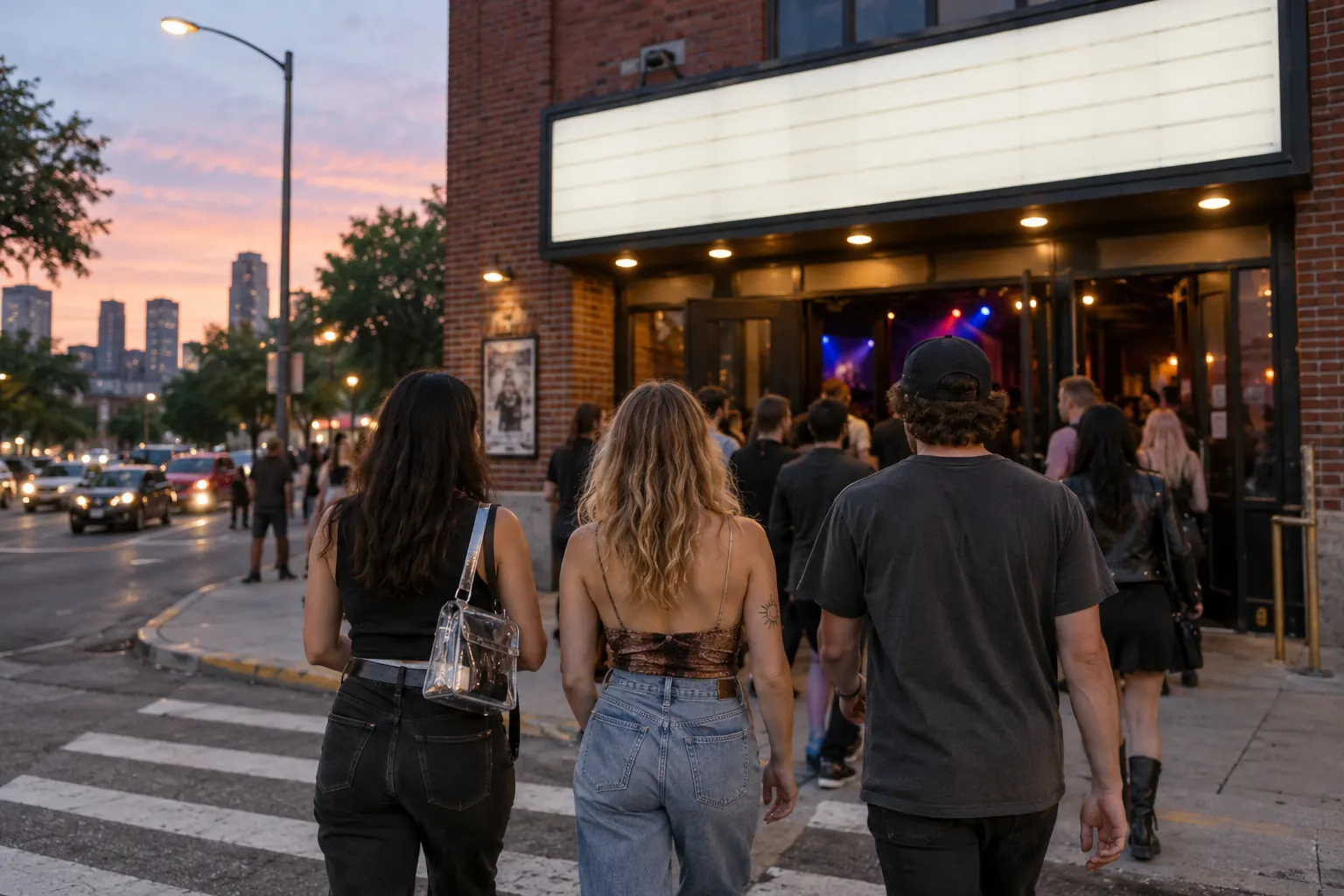
The ticket tells you when a show starts. It seldom tells you how long it will take to park, find the right door, pass a bag check and locate your seat. That missing stretch of time is where a relaxed night can turn frantic.
Think of arrival as a sequence with several small decisions rather than one departure time. You do not need a military schedule. You need to know which details are fixed and which can move.
Begin with the venue, not the map app
Open the event page and the venue's own visitor information. Look for door time, entry gate, permitted items, re-entry rules and accessibility information. A rule copied from another concert may be wrong for your event. Sometimes a promoter or event organizer adds restrictions, so check the event listing too.
Bag size is an easy mistake because policies differ by venue and event. A tote that worked last month at an outdoor festival may not be permitted in a small theater. If the official wording is hard to find, guides to venue bag rules can help you identify what to check, but the venue's current policy is the final authority. Set aside the bag you will actually carry and compare its measurements with the published limit.
Make a separate check for camera equipment, refillable bottles, umbrellas and medication. If a needed item is not described clearly, contact the venue ahead of time. The security line is a poor place to interpret an ambiguous policy.
Work backward from the moment you want to be inside
Suppose you would like fifteen quiet minutes before the performance. Add time for the walk from transit or parking, the security queue and collecting a ticket if needed. Then add a modest buffer for traffic or a missed turn. The result is a departure time based on the experience you want, not merely the printed showtime.
Where there is no reserved seating, arriving early may matter more. Where seating is assigned, a small buffer can be enough. Outdoor events need another weather check. Keep the schedule adjustable, but make the choice deliberately.
Make the last mile legible
Save the official entrance location and a screenshot of your tickets. A venue address may point to its office or center of a large campus, not the door you need. If going with friends, agree on a specific meeting point outside the security perimeter. 'Near the entrance' is vague when there are several.
If you are driving, compare the official parking information with your expected exit route. Our parking decision guide explains what to check before paying for a space. If you are taking transit, look up the final return service before you leave home, particularly for a late show.
A five-minute pocket check
Put the essentials in one place: ticket, phone, identification if required, payment method, keys and any permitted medical items. Charge the phone. Wear shoes you can stand in. Leave the objects you cannot bring in the car or at home rather than hoping to negotiate an exception.
If the venue provides accessible entry information or you need an accommodation, check the official access page and contact the venue in advance. Do not rely on another visitor's account of a previous event.
Once you arrive
Walk to the correct entrance before joining a queue. Read signs and have tickets ready. If someone in your group is delayed, make a plan that does not require everyone to leave the line. After security, find restrooms and water access before settling in.
The trip home deserves the same consideration as the trip in. Agree where to meet if you become separated, and look for the venue's rideshare pickup instructions if you intend to use them. Crowds disperse in different directions after a show; a few minutes of walking to a quieter pickup point may be easier than competing at the nearest curb, if local rules permit.
A successful arrival feels unremarkable. You know where to go, you have what you need, and the room is already filling with anticipation. The planning disappears into the evening. For a broader approach to carrying less, see our practical day-bag edit.
If you are meeting a group
Send one message with the venue entrance, meeting point and intended arrival window. Tickets may be held by different people, so make sure everyone can access their own if the venue uses digital admission. A screenshot can help with trip details, but some changing ticket codes require the live app; follow the ticket provider's instructions.
Agree on a simple rule for late arrivals: someone who is delayed meets the group inside, if permitted, rather than asking everyone to wait outside. If seating is assigned, that rule is especially easy. Keep expectations clear for people who might need more time walking or moving through security.
What to do when information conflicts
A search snippet says small bags are permitted, but your ticket email says bags are prohibited. Open the current official event page and venue policy, then contact the venue if the conflict remains. Screenshots from another attendee and old social posts are useful clues, but they cannot settle a live rule. Likewise, a parking offer from a reseller may not describe the correct entrance.
Give yourself a little time to resolve uncertainty before the day of the show. The reward is simple: when the evening comes, you can be interested in the performance instead of in the fine print.
After the final song
Do not rush to the curb while traffic is at its peak unless you have to. Pause for water, check that your group has its belongings, then follow the planned route. If you need to collect a car, be considerate of pedestrians and staff directing traffic. If the walk feels different at night, stay together or choose a staffed route. The evening ends when everyone gets home comfortably.
A plan for different kinds of venues
At a seated theater, the entrance and the opening curtain govern your timing. At a standing-room club, your preferred place in the room may matter more than the printed start. At an outdoor festival, distance between stages, weather exposure and permitted water may become the main questions. Start with the actual event format instead of reusing last month's routine.
Many venues offer an accessibility page with details about entrances, seats and assistance. If your group has a specific requirement, ask the venue rather than guessing from a seating chart. Explain the need clearly and save the response for your visit.
Bring less uncertainty to the door
The ticket may be on your phone, in an app, or available at will call. Confirm the delivery method the day before. Make sure the account holder can open the ticket and that companions know whether entry together is required. If you cannot get an answer, contact the ticket seller before traveling.
This is the useful boundary of a checklist: it can remind you where uncertainty lives, but only the relevant organizer can resolve a live exception. Once those questions are answered, stop refreshing every page and let the night begin.
The day-of check
On the morning of the performance, glance at the venue's official channels for any operational update. Do this once, not continuously. Severe weather, a changed entrance or a delayed start can affect your journey; if nothing has changed, return to your ordinary day. Eat before a late show if food options are uncertain, and bring only what the event allows.
Before leaving, ask each person in the group to check their own ticket and essential belongings. That two-minute pause is easier than retracing the journey for a forgotten phone. You have done the useful preparation. The rest is music, people and a room you came to share.