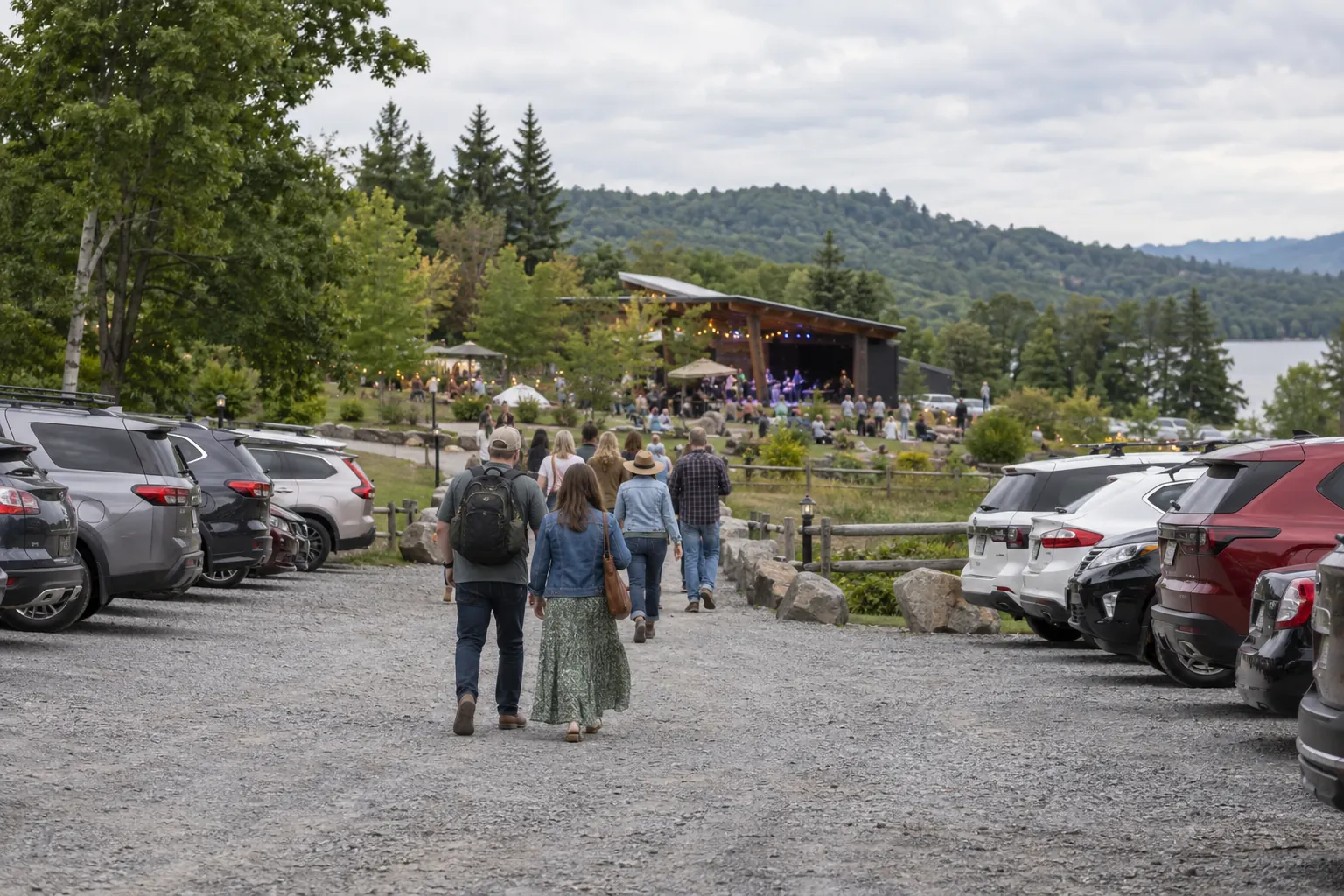
A parking map can look simple until the streets around a venue fill with people. A lot five minutes away on a quiet afternoon may require a long detour after a show. The useful question is not merely where a car can fit. It is how the entire arrival and departure will work.
Use this decision guide before you buy a parking pass or choose a street space. It keeps the focus on information you can verify and the tradeoffs that matter for your group.
First, decide whether you need the car
Check the venue's transit page and the last service back. Consider whether one person in your group has mobility needs, whether you are carrying bulky items and how far you will be traveling after the event. For a central venue with reliable late transit, leaving the car may simplify the night. For a remote venue, driving may be the only practical option.
If you do drive, start with the venue's official parking page. It should tell you which lots are designated for the event, whether prepayment is offered and how to reach the correct entrance. A general map app may show a nearby garage without telling you whether it is open for this event.
You can use guides to parking near major venues to frame the questions and compare options. Verify live prices, hours, access and entrance details with the operator or venue before committing. Parking rules can change by date.
Compare the whole route
List two or three realistic options. For each one, consider the drive in, the walking route, the time you want to arrive and how you will leave. A slightly longer walk on a clear, well-lit route may be preferable to a short walk across a confusing intersection. If walking distance is a concern, check the venue's official accessibility information and available drop-off instructions.
The price shown on a reservation page may exclude fees or vary by event. Read the final checkout amount and cancellation terms. Confirm the time window too: a reservation that ends before the event does is not useful. Take a screenshot of the confirmation and the operator's entry instructions.
Street parking requires more scrutiny. Read every posted sign at the location, including temporary notices. Do not assume the rules on the opposite side of the street are identical. If a neighborhood has residential restrictions, respect them; local residents live with event traffic long after visitors leave.
Plan the exit while you are calm
The closest lot can be slowest to empty. Think about which road you need after leaving and whether the lot forces a particular turn. A short walk to a space outside the busiest block can occasionally save time, but only if the walk and return route work for your group.
Set a meeting point by the car and a second point near the venue if your group splits up. Photograph the level or landmark where you parked. Save the route for offline use if reception may be poor. None of this is glamorous, but it gives tired people fewer decisions after a loud event.
Accessibility and drop-off deserve their own check
Accessible spaces, pickup areas and shuttle service depend on the venue and event. Read the venue's current accessibility page and contact its staff for anything unclear. A third-party map cannot confirm that a temporary entrance or shuttle is operating on the day you attend.
For a group with a passenger who cannot walk far, a formal drop-off point may be more useful than a close-looking garage. Agree on a pickup arrangement before the event. Do not stop in a travel lane or assume a rideshare curb is also a personal-car pickup zone.
If your plan falls apart
Keep one backup garage or transit option in mind, plus the official venue directions page. If the first lot is full, pull into a safe place before searching again. Let the rest of the group know the arrival will change. Avoid following other cars into restricted entrances simply because the line appears shorter.
After you park, allow enough time to get through the doors. Our calmer show arrival plan covers bags, tickets and the last minutes before entry. A good parking choice is the one that leaves you enough energy to enjoy what you came to see.
A practical comparison on paper
Write three headings: official lot, nearby garage and transit or drop-off. Under each, note total cost if known, walking effort, return plan and how confident you are in the information. Mark anything that needs a current check. This method exposes a false bargain: a lower advertised price can come with uncertain hours, extra fees or a route that does not work for someone in your group.
If you are sharing the ride, agree beforehand on how parking costs will be split. Otherwise the driver may end up handling both navigation and an awkward conversation at the gate. Make sure the payment method accepted by the lot will work if your phone battery is low.
Rain, crowds and changing roads
Weather can turn a comfortable walk into a difficult one. Take a layer or small permitted umbrella if rain is likely, but check venue entry rules first. Road closures or traffic controls can alter access on event day; follow current instructions issued by the venue and local authorities rather than an old route saved on your phone.
A parking plan should survive one setback. If the reserved lot is inaccessible, you know the operator's contact path and have a legal alternative. If the show runs late, you know the lot's exit hours. Spending ten minutes on those checks at home can save much more time outside a crowded gate.
The choice that works for your group
Some people value the shortest possible walk; others want an easy exit. There is no universal best lot. Choose the option that respects the group's mobility, timing and budget. Once chosen, save the confirmation and stop comparing every possible space. The rest of the evening deserves attention too.
When reserving ahead makes sense
A reservation can give you certainty about a spot, but only if the pass covers the correct date, event and entry window. Read whether it guarantees a particular garage or only a space in a wider network. Check whether oversize vehicles, motorcycles or accessible parking have separate rules. Confirm that the address on your receipt leads to the vehicle entrance.
If you prefer to pay on arrival, know whether the lot accepts your payment method and whether cash is required or refused. Never assume pricing from a previous event. Build a ceiling for the cost you are comfortable paying, then use that to compare driving with transit or a shared ride.
A quieter arrival for the driver
The driver often does more invisible work: choosing a route, reading signs, finding a space and keeping the group together. Another passenger can help by checking current directions and holding the confirmation ready. Once parked, everyone can walk the last stretch together. The day begins better when one person is not carrying every practical decision.
One final look before you leave
Reopen the parking confirmation on the day of the event. Match the date, arrival window and address to your plans. If there is a temporary traffic notice, follow current official instructions. Download the directions or take a screenshot, but remain alert to signs and people directing vehicles when you get there.
Parking is a supporting part of an outing. Once the choice is sound, it should stop occupying your thoughts. Walk the final stretch, find your entrance and enjoy the reason you made the trip.