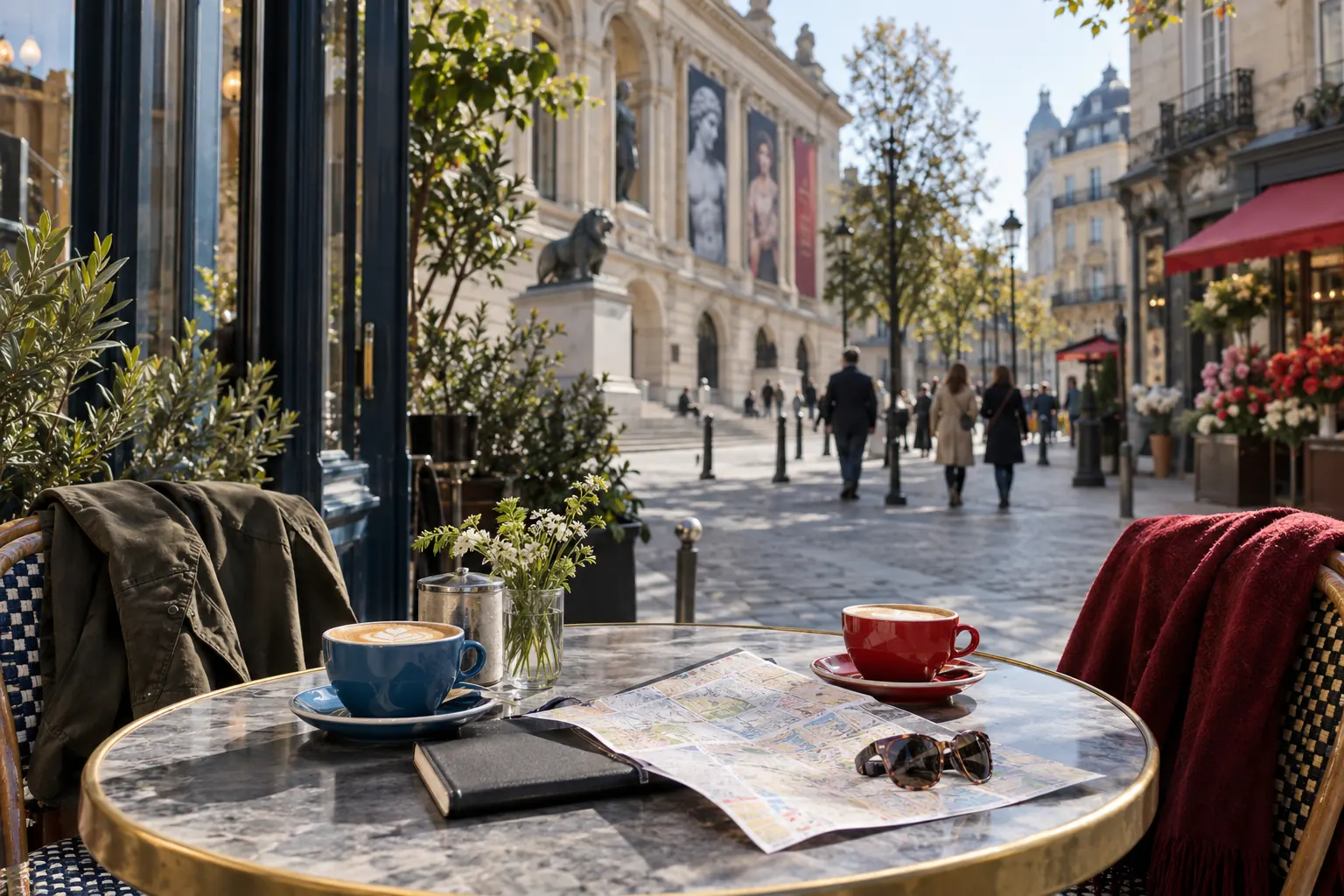
A good city day does not have to cover the city. One exhibition, one neighborhood walk and one meal can give you more to remember than a sequence of rushed appointments. The trick is to pick the anchor before filling the hours around it.
This itinerary is a framework, not a claim about a particular city. Check current opening times, admission rules and transit service for the place you choose. Keep the interesting discoveries and drop anything that makes the day feel like a checklist.
Morning: choose your anchor
Choose a museum, market, garden or small performance that you genuinely want to experience. Book ahead if the official site requires it, then plan your arrival with a modest buffer. If the destination is busy, an earlier slot may offer more room. If you prefer a leisurely breakfast, select an afternoon ticket instead of pretending you will hurry happily.
Look at the map as a pedestrian. Where is the nearest useful transit stop? Is there a quieter street for a walk afterward? Are there steps or long corridors that may affect anyone in your group? Knowing the rough geography prevents a day of repeatedly crossing the same district.
Start with a simple breakfast and enough time to get there. Do not schedule an elaborate meal immediately before a timed entrance. The ordinary start gives the outing a better rhythm.
Midday: look closely, then step outside
At the anchor destination, choose what interests you most rather than attempting every room or stall. Pause when your attention begins to fade. A postcard shop or museum cafe can be a good stop, but it is not mandatory; stepping outside for air may be better.
Walk toward lunch on a route that has something to notice: a small park, a street of older buildings or an independent bookstore. Let one unplanned stop happen. You can keep a saved map, but do not watch it every minute. If the route becomes tiring or the weather changes, go straight to the meal.
For a ticketed event later in the day, our before-the-show checklist covers the entry details people tend to forget. If you are driving instead of taking transit, the event parking guide helps you decide where the car should go.
Afternoon: leave a blank space
The blank hour is not a failure to plan. It absorbs a late lunch, a conversation, a shop you want to browse or a rest. If nothing calls to you, sit down with a drink and watch the neighborhood. The most satisfying part of an outing can be the moment you stop moving.
If traveling with a dog, narrow the anchor to places that permit pets and check the individual business or park rules. Our dog day-trip guide offers a gentler route and packing plan. A museum and a dog walk are usually different kinds of day; combining them requires a companion who can look after the dog and a setting that truly allows it.
Evening: decide before fatigue decides
You can leave after lunch and still have had a full day. If you stay, pick a dinner area near your route home. Check the last transit service or parking exit rather than assuming it will be obvious later. Agree with the group on a point at which you will call it a day.
Keep a short note afterward: the one place you would revisit, the timing that worked, and the stop you would skip. That note will be more useful than a long list of attractions saved in an app.
A slow city day has an unusual measure of success. It should leave you able to describe what you saw and how it felt. If your favorite memory is an unplanned side street, the plan did its job by making room for it.
Change the itinerary for different companions
With a friend who loves conversation, give lunch more time. With a child, choose an anchor that allows movement and expect a shorter visit. With a companion who tires easily, make a short trip with reliable places to sit. The city has not failed you if you spend an hour on one bench and skip an attraction.
For visitors arriving by car, check the official destination's parking information before deciding on the neighborhood. A garage near the anchor may be a sensible place to leave the vehicle for the whole visit. Moving the car between stops often costs more attention than the short walk it saves.
An alternative for bad weather
If rain arrives after the anchor activity, replace the neighborhood walk with one nearby indoor stop. A bookstore, library or cafe may work, provided it is actually open and suitable for your group. If severe weather is forecast, postpone the trip. A flexible plan remains useful because its purpose is to make the day enjoyable, not to win against the forecast.
What to remember afterward
Take one photograph if you like, but write a sentence about a detail the image misses: the sound in the gallery, a color on an old doorway, a conversation over lunch. That memory will tell you why the day was worth making. The next city outing can have a different anchor and the same generous pace.
A small budget for surprises
Set a comfortable spending range before leaving. Admission, transit, a meal and the occasional impulse stop add up. When you know what is available for the day, you can say yes to a pastry or a small exhibition without mentally recalculating every purchase.
A free anchor can be just as good as a ticketed one. Try a public garden, a neighborhood walking route or a gallery with free admission, after checking the current hours. Spend on the part you value: perhaps a long lunch, perhaps the train fare to a district you have never seen.
If one stop disappoints
A closed shop or underwhelming exhibition need not ruin the itinerary. Walk a different block, sit in the park or move lunch earlier. Keep the next choice near where you already are instead of crossing town to compensate. The day has value even when one piece is merely ordinary. Often the unscheduled detour becomes the detail you remember.
A route for the return
Before the final stop, look again at the way home. If you are taking transit, check the stop and any service changes. If you drove, remember the garage entrance and closing time. A day with a gentle pace deserves an equally gentle exit; do not leave every practical question for the tired version of yourself.
You might buy nothing more than lunch and still come home with a new sense of the neighborhood. The day does not need a souvenir to have happened. A note about the place you want to revisit is often more useful.
The small stop you remember
A city often reveals itself in the transitions: a crossing at an old bridge, the pause before a cafe opens, a wall painted with a color you would not choose at home. Let the walk between major stops be part of the visit. Look up now and then instead of treating the street as a corridor between attractions.
If the day includes someone new to the city, ask what they would like to see before selecting every stop. Your familiar shortcut may be their first look at a neighborhood. Share one favorite place, then let them choose the next turn. The resulting itinerary belongs to both of you.