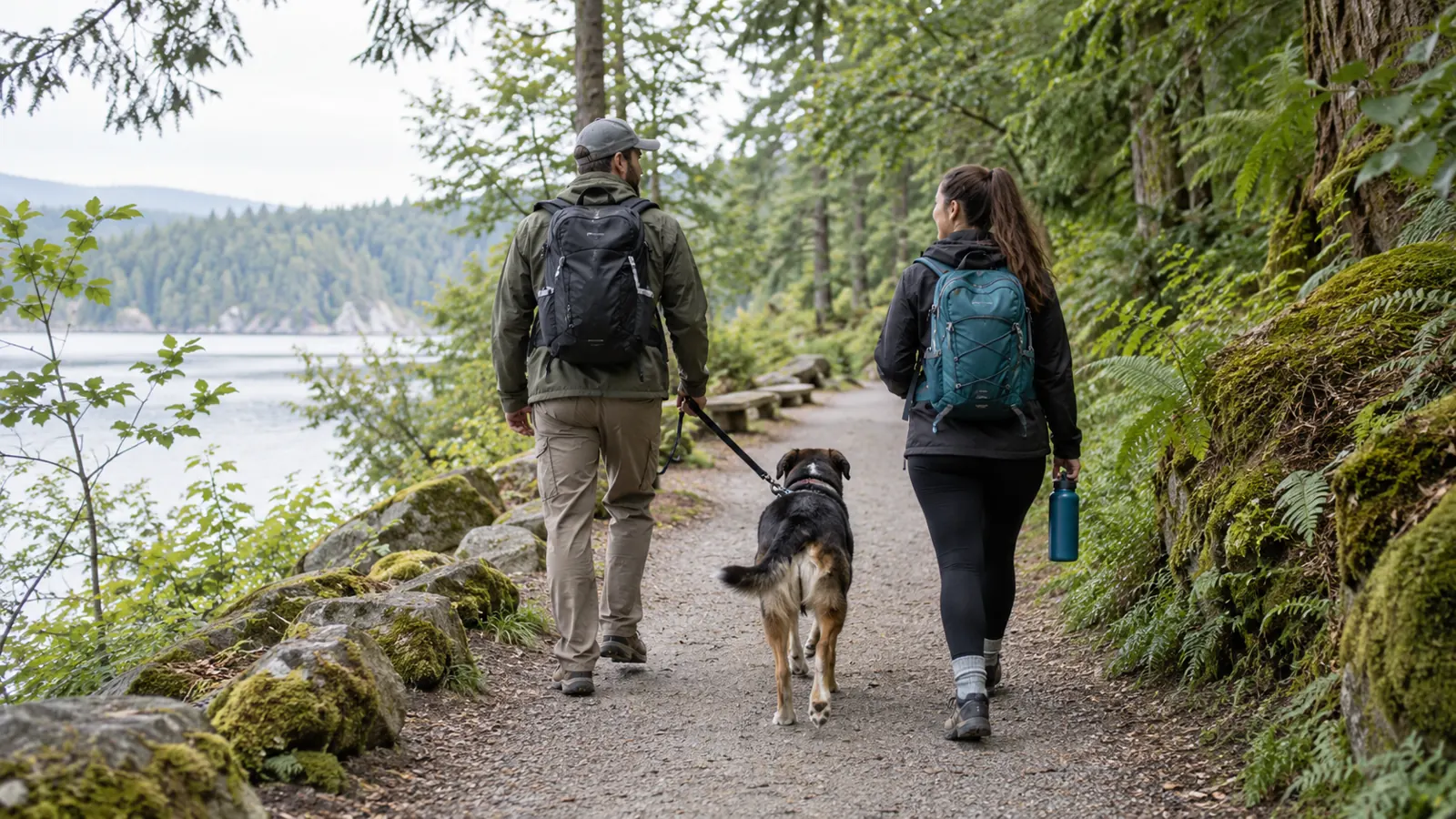
A dog can turn an ordinary walk into a good story, but bringing one along changes the shape of the day. A two-hour outing may involve heat, crowded paths, unfamiliar dogs, a long car ride and nowhere quiet to rest. The pleasant version begins with a plan small enough to change.
This field guide is for the person who wants a walk, a meal or a day trip with a dog and would rather enjoy the place than spend the whole visit troubleshooting. The first decision is simple: is this a good day for your particular dog? An older dog with stiff joints, a noise-sensitive rescue and an energetic young dog need different plans even on the same trail.
Choose the outing by your dog's energy, not the postcard
Start with an activity your dog already handles well. If a neighborhood stroll is comfortable for forty minutes, a long rocky loop in unfamiliar terrain is a big jump. Pick a route with an easy exit and make the first visit short. A familiar pace matters more than reaching a scenic endpoint.
Look at the ground underfoot. Pavement can be hard on paws during hot weather; loose gravel and steep steps may be difficult for some dogs. Find shade, water access and a place to pause. A bench a few minutes from the trailhead can turn a rushed visit into a good one.
Before visiting a park, read the actual location's pet page. Rules can differ from one trail to another, even inside the same park. The National Park Service pet guidance offers a useful starting point, then the page for the individual park should settle the details. A dog-friendly label on a general search result does not tell you which paths or buildings are open to pets.
A loose itinerary beats a packed timetable
Try an outing with three parts: a low-pressure arrival walk, one main activity, and an optional stop. Leave a little time between them. Dogs need to sniff, drink and settle after a car trip; people need time to find the entrance and read posted notices.
For a town visit, park near a quiet walking route before heading toward the busy center. Give the dog a chance to get comfortable. If you hope to sit at a patio, check that the business currently allows dogs and whether its outdoor seating is open. Have a backup takeaway spot. A trip should not hinge on one cafe's weather-dependent tables.
If other people are joining, tell them the dog may set the pace. That sentence prevents the awkward moment when someone expects an all-day itinerary and you need to go home early. Our slow city-day plan shows how to arrange a day with one anchor activity and several easy exits.
Pack for the journey you might have
Carry water and a portable bowl even if the venue advertises a fountain. Bring bags, a short leash, any medicine your dog needs, a towel for muddy paws and a small familiar treat. For a long drive, keep a separate cloth or blanket for the ride home. A bag full of gadgets is less useful than the few things that solve predictable problems.
Your own kit matters too. Comfortable shoes, charged phone, weather layer and food make it easier to focus on the dog. If the outing ends at a ticketed event, read the venue's current pet rules before booking. Many public places that welcome service animals do not admit pets; do not assume a nearby outdoor space means the event itself is pet-friendly.
Watch the dog, then adjust
A dog pulling hard toward every sound may be overexcited rather than delighted. One that stops, lags, hides behind you or refuses water may need a break. Move to a quieter patch and see whether the dog settles. Turning back is a normal outcome, not a failed trip.
Weather changes the plan fast. The ASPCA's park-safety advice reminds owners to watch for hazards on the ground as well as heat and hydration. Check the forecast before leaving and use shade and rest generously. If your dog seems unwell, contact your veterinarian.
Make the return part of the plan
Take a final short break before getting into the car. Offer water, check paws for grit or irritation, and secure the dog for travel. Keep the last stop optional: tired dogs rarely care that the itinerary promised an extra viewpoint. At home, wash the bowl, restock bags and note what worked. That small note will make the next outing easier.
The best dog day is rarely the most ambitious. It is the one where you notice when your companion is comfortable, choose a place you can both enjoy and leave while the day still feels good. For a different kind of flexible outing, see our rainy-day ideas.
A route that still works if you leave early
Choose one turnaround point before you begin. It could be a bridge, a shaded lawn or a cafe with outdoor tables. When you reach it, reassess the dog and the people. You can continue if everyone is comfortable, but reaching the point is enough. This removes the pressure to complete a loop whose second half may be harder than the first.
A short walk with a dog who is calm afterward can be more satisfying than a long trail that leaves everyone exhausted. If you are meeting others, share the turnaround plan in advance. You will not have to improvise an explanation when the group wants to press on.
When a dog-friendly label isn't enough
A place may allow dogs in a courtyard but not inside its buildings. A trail may prohibit pets on a sensitive section. A patio may accept dogs only at the manager's discretion or only when a particular area is open. Call or check the current official page when this distinction matters to your day.
Bring the leash even if you expect off-leash time. Respect wildlife, other visitors and people who are uneasy around dogs. Ask before letting your dog approach another dog, and give narrow paths to others when possible. The aim is an outing that works for everyone sharing the space.
A sample half-day
Start with a short drive to a shaded path and a relaxed arrival walk. After a water break, follow a manageable section of trail. Return before the warmest or busiest part of the day, then choose an optional outdoor meal if the dog is settled. If not, take food home. The alternative has been part of the plan from the beginning.
This is not a rigid timetable. It is a way to make a few good choices in the right order: comfort first, activity second, extras last.
Two quick decisions before booking
A ticketed garden, ferry or outdoor attraction may sound dog-friendly in a general travel article. Before buying, check two separate things: whether pets can enter the property and whether they can join the particular activity you have chosen. A dog might be welcome on a path but prohibited on a tour. Find the exact restriction and a realistic alternative for your group.
Next, consider the travel itself. A dog who dislikes long car rides may enjoy a shorter, less impressive destination. If the road trip is the hardest part, pick somewhere close and save the bigger excursion for a time when you can make more stops. The destination is only one portion of a good day.
Aftercare is part of the experience
A dog who had a busy day may need calm, water and a familiar place to sleep. Avoid interpreting every sleepy hour as a problem, but pay attention to unusual behavior and contact your veterinarian if you are concerned. Clean and store the gear so the next invitation does not begin with a missing leash or an empty water bottle. A little aftercare makes the outing feel complete.