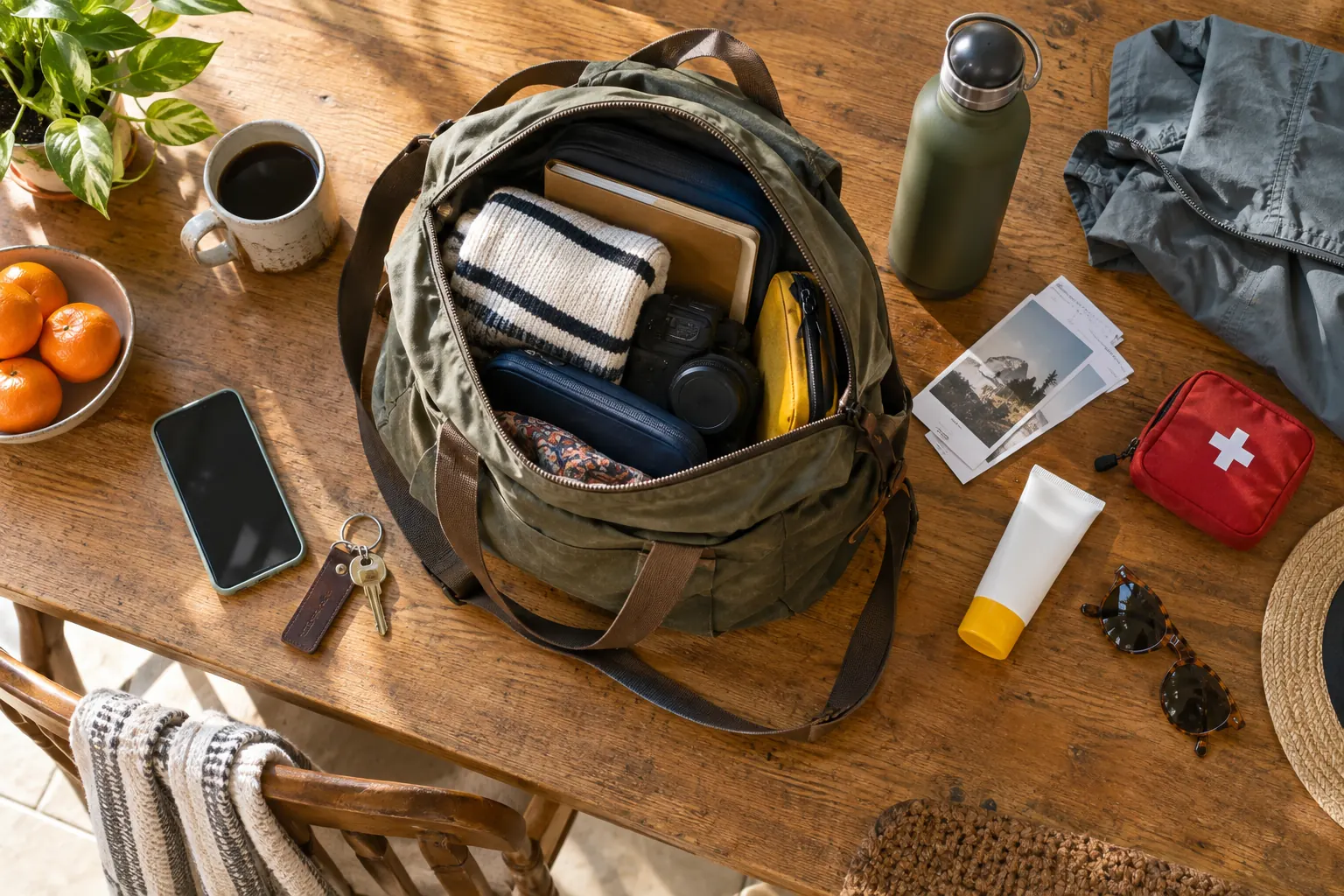
A day bag becomes heavy one 'just in case' item at a time. The useful version holds what you need to move comfortably, recover from a small change of plans and pass through the places on your itinerary.
Start with the destination. A walk in a park, a museum visit and an arena event can require three different bags. The goal is not to own a perfect kit. It is to make a short, accurate choice before leaving the house.
The five things to settle first
Check the forecast. Decide how long you will be away. Note whether you will have easy access to food and water. Find out whether you will enter a venue with bag restrictions. Finally, consider who is coming with you and whether anyone has specific needs.
These questions will do more for you than a universal packing list. A light jacket matters more than a second notebook on a cool evening. Water may be essential on a long trail but restricted at a security checkpoint. Let the place set the list.
If you are headed to a performance, read the event's official entry page. Bag size limits and prohibited items vary. Our show arrival guide explains how to check the whole entry sequence before you leave. Do not assume a clear bag is required or permitted everywhere.
Build a compact core
Begin with keys, payment, identification if needed, tickets, a charged phone and any necessary personal medication. Add a small weather layer and water where permitted. A tissue packet and a compact reusable tote can help, but only if they are allowed at the places you intend to visit.
Put small items in a pocket or pouch so you can find them without emptying the bag on a sidewalk. Separate liquids from paper. If the weather is uncertain, choose a layer you can wear rather than carry all afternoon.
For a dog outing, add a short leash, waste bags, portable bowl and water. Our dog-friendly outing guide covers how to choose a route and watch your dog's comfort. The dog's kit belongs on the list before decorative extras.
What usually stays home
A full-size umbrella on a day with a low chance of rain, duplicate chargers, a thick book you will not open and a giant bottle for a two-hour visit may all be unnecessary. These are examples, not rules. If you truly use an item every time, keep it. If it has traveled untouched for months, reconsider it.
Avoid carrying valuables you cannot comfortably keep track of. Check photography rules before bringing a large camera. At events, do not pack a prohibited object on the hope that security will overlook it.
Run an exit test
Lift the bag and walk around the room. Can you carry it for the full day? Can you reach the ticket and phone quickly? Will it fit the published venue measurements? Does it leave your hands free for a dog leash or a companion's hand?
Then check your route. A bag that works at the first stop may not be allowed at the second. If your afternoon includes an event, plan where any extra items can remain safely. A car is only a solution if the venue permits you to return to it and you can store things out of sight.
A lighter bag changes the feeling of an outing. You spend less time managing objects and more time seeing where you are. If the next trip involves a venue and a car, pair this checklist with our event parking decisions.
Destination-specific edits
For a museum, favor a small bag that is easy to keep close and check the museum's current bag or coat-check rules. For a park, water, sun protection and a weather layer may matter more than a compact silhouette. For a concert, the venue's published bag dimensions and prohibited-items list take priority over a general day-trip checklist.
If the trip includes a long walk, distribute weight so the bag sits comfortably. A small crossbody bag is convenient for tickets but can become irritating if you overfill it. A backpack may be comfortable outdoors but awkward in a crowded gallery. Pick the container after you know what is inside.
A small checklist you can actually remember
Before you leave, ask: Can I enter every planned stop? Can I stay comfortable if the weather changes? Can I get home if my phone loses charge? Does anyone with me need something different? These four questions cover many more situations than a drawer full of travel accessories.
There is no need to buy a new organizer to pack well. Use a pouch you own, remove what you do not need and put essentials back in their usual places at the end of the day. A simple repeatable habit is easier to maintain than a perfected packing system.
Leave a little room
The bag should not be full at departure. You may pick up a leaflet, take off a layer or carry something for a companion. A little empty space makes the whole day easier. When the bag feels manageable and the key details are checked, close it and go.
A version for companions
When several people are traveling together, agree on shared items before everyone packs the same heavy thing. One person might carry a permitted water bottle, another the reservation details. Each person still needs their own essential medicine, payment method and means of getting home. The shared kit should make the group more comfortable, not make one person responsible for everything.
With children, bring the things that solve the likely points of friction: a snack where permitted, a spare layer and one modest activity for waiting. With a dog, the water and waste bags are essentials rather than optional extras. Different companions change the bag more than the destination does.
Test the bag after the outing
When you return, empty it. Notice what you used, what you missed and what stayed untouched. Restock essentials immediately. After two or three outings, a practical packing pattern emerges naturally. You will no longer need to consult a lengthy universal list; you will know what this kind of day actually asks of you.
One last note about access
Some people carry supplies that are not optional, including medication, mobility-related items or equipment for a child. Generic minimalist advice should never pressure you to leave those behind. Check the official venue process for necessary items that appear to conflict with a general bag rule, and ask for clarification before arrival when possible.
A practical bag is personal. It should reduce friction for your actual life, not meet someone else's idea of what a traveler ought to carry. The lightest bag is the one that holds the right things and leaves the rest at home.
The night-before version
If the morning will be rushed, prepare the essentials the previous evening. Charge the phone, confirm tickets and lay out the bag and weather layer. Leave perishable food and daily medication where you will remember them safely in the morning. A short note beside the door can be more reliable than trying to remember everything while putting on shoes.
Check the bag once more against the destination's rules. If it is too large, remove items before the journey rather than hoping a gate attendant can solve the problem. Leave yourself room to change bags without changing the whole day.